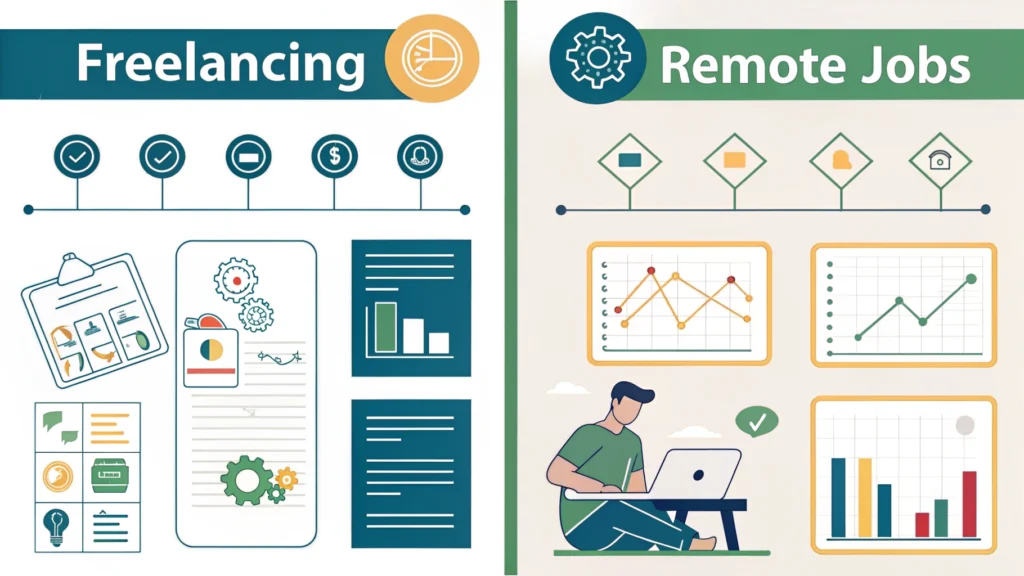
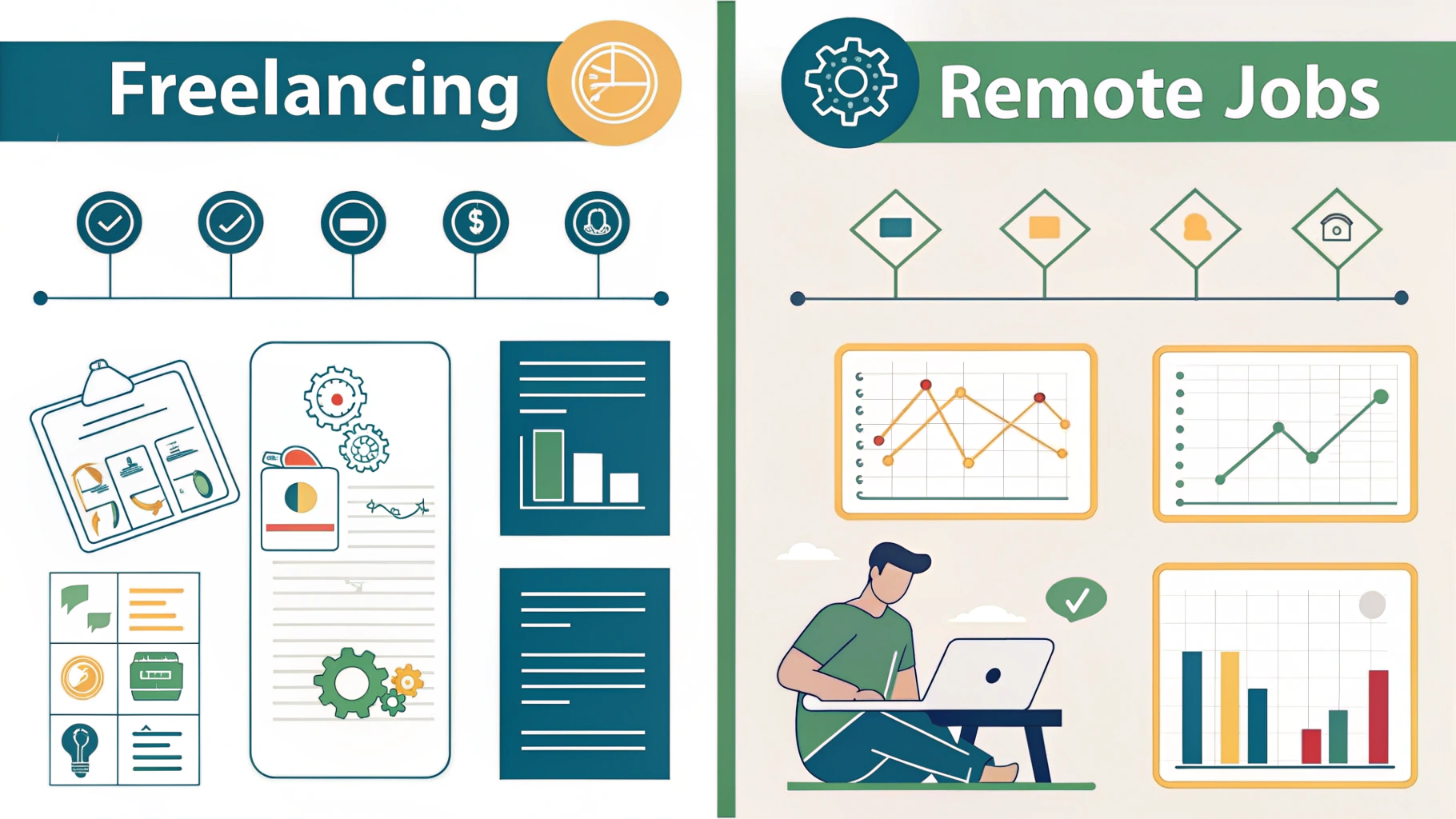
In today’s evolving work landscape, many individuals are weighing the options of freelancing versus remote jobs. Both paths offer unique advantages and challenges, especially when it comes to achieving a steady income. This article delves into the key differences between these two work styles, helping you make an informed decision based on your financial goals and lifestyle preferences.
Understanding Freelancing
Freelancing refers to working independently, typically on a project or contract basis. Freelancers often juggle multiple clients, which can lead to a varied income stream. Here are some characteristics of freelancing:
- Flexibility: Freelancers can choose their projects and set their schedules.
- Diverse Income: Income can fluctuate significantly based on the number of clients and projects.
- Self-Employment: Freelancers manage their taxes, insurance, and retirement savings.
Pros of Freelancing
Freelancing offers several benefits that attract many professionals:
- Autonomy: You have complete control over your workload and clients.
- Potential for Higher Earnings: Successful freelancers can earn more than traditional employees.
- Variety of Work: Freelancers often work on diverse projects, keeping work interesting.
Cons of Freelancing
However, freelancing is not without its challenges:
- Income Instability: Earnings can be unpredictable, especially during slow periods.
- Self-Management: Freelancers must handle their own marketing, finances, and client relations.
- Limited Benefits: Freelancers typically do not receive health insurance or retirement plans from employers.
Understanding Remote Jobs
Remote jobs, on the other hand, are positions where employees work from a location of their choice, often from home. These roles can range from full-time to part-time and usually come with fixed salaries. Key features of remote jobs include:
- Stability: Remote workers typically receive a steady paycheck.
- Employee Benefits: Many remote positions offer health insurance, retirement plans, and paid time off.
- Structured Environment: Remote jobs often come with set hours and responsibilities.
Pros of Remote Jobs
Remote jobs also present numerous advantages:
- Consistent Income: Employees receive regular paychecks, making budgeting easier.
- Work-Life Balance: Remote work often allows for a better balance between personal and professional life.
- Supportive Environment: Many remote teams have established support systems and resources.
Cons of Remote Jobs
Despite their benefits, remote jobs have some drawbacks:
- Less Flexibility: Employees may have less control over their schedules compared to freelancers.
- Isolation: Remote workers can feel disconnected from colleagues and company culture.
- Dependence on Employer: Job security is tied to the employer’s stability and performance.
Which is Better for Steady Income?
When considering steady income, remote jobs generally provide more stability than freelancing. Regular paychecks help in financial planning and reduce the stress associated with income fluctuations. However, the choice ultimately depends on individual circumstances and preferences.
Factors to Consider
Here are some factors to help you decide:
- Financial Goals: Consider your need for a consistent income versus your desire for flexibility.
- Work Style: Reflect on whether you thrive in structured environments or prefer autonomy.
- Industry Demand: Research your field to determine which option offers better opportunities.
For more insights on the future of remote work and the skills that will pay most, check out The future of remote work – What skills will pay most. Additionally, you can explore more about both work styles in Freelancing & Remote Work and dive deeper into advanced topics in Freelancing & Remote Work (Advanced Topics).
Related Articles
Frequently Asked Questions
What are the main differences between freelancing and remote jobs?
Freelancers work independently on a project basis, while remote jobs are typically full-time or part-time positions with a steady income.
Can freelancers earn a steady income?
Yes, freelancers can earn a steady income, but it often depends on their ability to secure consistent work and manage their finances effectively.
What benefits do remote jobs offer?
Remote jobs often provide benefits such as health insurance, retirement plans, and paid time off, which are typically not available to freelancers.